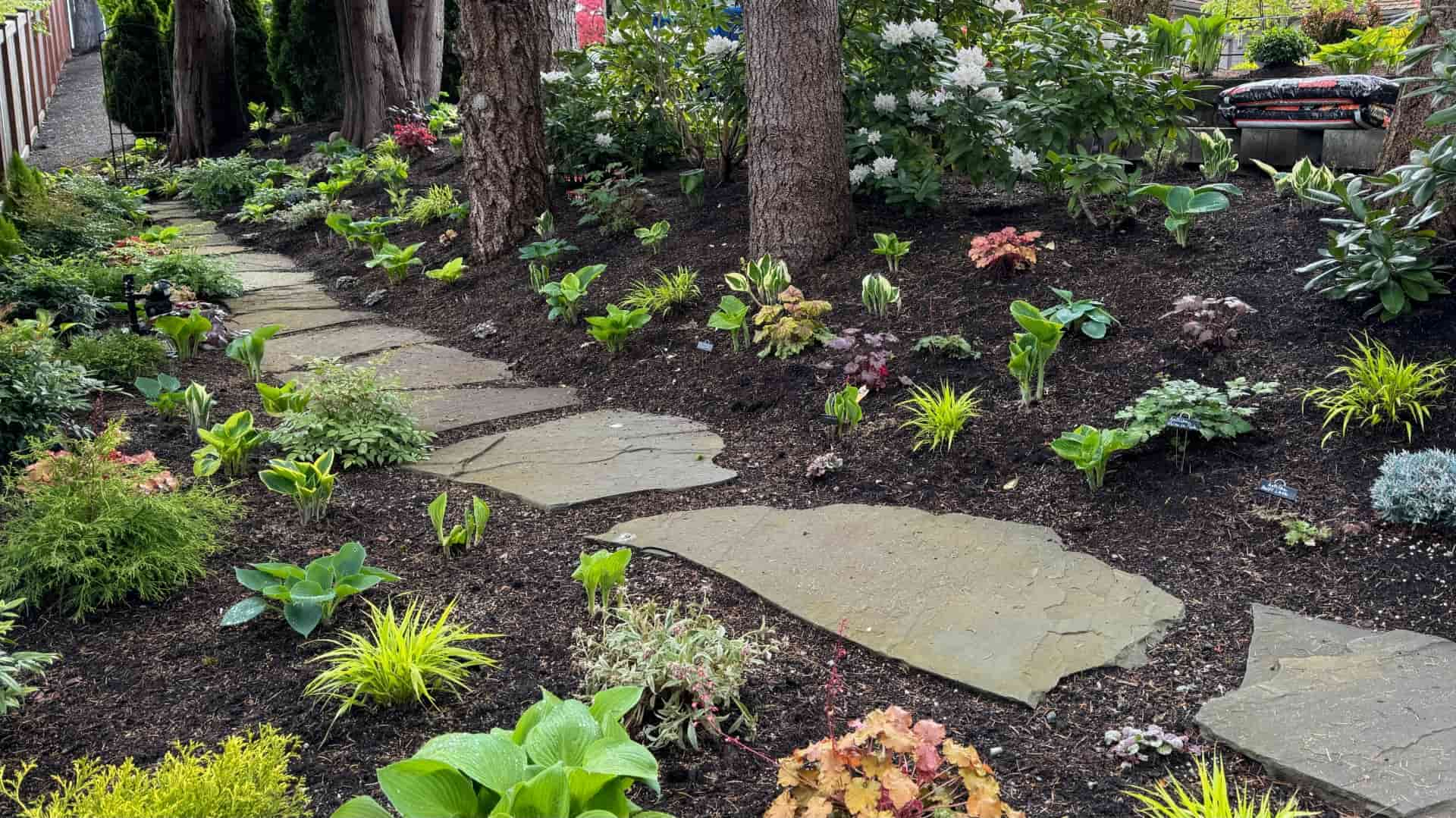
How Bark Installation Improves Soil Health and Reduces Watering Needs
Bark installation is one of the fastest ways to build healthier soil, help plants withstand heat, and reduce watering. When a professional landscaping company installs bark mulch with the right material and depth, your beds hold moisture longer, stay cooler in summer, and resist weed pressure. Over time, the bark breaks down into organic matter that feeds the soil life your plants depend on.
If you want guidance for your yard, a friendly specialist at Titan Landscape Improvement is happy to help at 253-324-4034.
What Bark Mulch Does For Your Landscape
Bark mulch works like a protective blanket for your soil. It slows evaporation after rain or irrigation, which means your plants get more from every drop of water. That same layer evens out soil temperature so roots are less stressed by hot afternoons and cool nights. Bark also blocks sunlight at the soil surface, reducing the sprouting of new weed seeds and their ability to compete with your plants.
- Moisture retention that helps reduce how often you water during dry spells
- Temperature regulation that protects roots from heat spikes and light frosts
- Weed suppression that limits competition for water and nutrients
- Gradual soil enrichment as bark decomposes into organic matter
How Bark Installation Supports Water Savings
Water loss from bare soil happens fast. Sun and wind pull moisture from the surface, and frequent watering can create shallow roots. A well-installed bark layer slows that loss and encourages roots to explore deeper, cooler soil. Deeper roots are more resilient and need less frequent irrigation. In many communities, seasonal watering restrictions arrive with the first heat waves. With bark in place before summer, your beds are better prepared to ride out longer gaps between waterings.
Because bark reduces splashing and crusting on the soil surface, it also improves water infiltration. More of your irrigation soaks in where roots can use it instead of running off walkways or compacted spots.
Temperature Regulation That Keeps Roots Comfortable
Extreme heat at the surface can damage feeder roots and stress shrubs, perennials, and young trees. Bark provides insulation that helps keep the top few inches of soil more stable throughout the day. On cool nights, it helps hold warmth. On sunny afternoons, it blunts the peak heat that cooks unprotected soil. This steady environment keeps root systems active and nutrient uptake consistent, resulting in stronger growth and steadier blooms.
Weed Suppression Without Harsh Chemicals
Weeds need light to germinate. Bark blocks that light and disrupts their growth cycle. Fewer weeds mean less competition for moisture and nutrients, which is another way bark helps you water less. You will still see the odd windblown seed land on top of the mulch. Those are easier to pluck because bark keeps roots from anchoring in the soil below.
Soil Health: What Happens As Bark Breaks Down
The real magic of bark mulch happens over months and years. Soil organisms slowly digest the bark and turn it into humus, the dark, sponge-like material that holds water, nutrients, and air. As organic matter builds, soil particles form stable aggregates. That creates tiny pathways for air and water, so roots can breathe and moisture can soak in evenly. The result is living soil that supports healthier, more self-reliant plants.
As bark decomposes, it also feeds beneficial fungi and microbes. These partners help plants access nutrients and improve disease resistance. Healthy soil biology means less stress and a landscape that better handles weather swings.
Types Of Bark Mulch And How They Enrich Soil
Different bark products break down at different speeds. Choosing the right one depends on your plantings, your desired look, and how quickly you want organic matter to build in your beds.
- Choose medium particle size to balance water retention and airflow. Medium chips and shredded bark settle into a close, even layer that insulates well yet still lets rain move through.
- Pine bark fines and blends break down the fastest. They add organic matter quickly and are great for beds that need a soil boost.
- Fir or mixed softwood bark offers a moderate breakdown rate. It looks tidy and feeds the soil at a steady pace.
- Cedar and hemlock bark often last longer because of natural compounds that slow decay. They still enrich the soil over time, just more gradually.
- Larger nuggets last the longest but insulate less tightly and can roll on slopes. They are best for low-maintenance areas with a stable grade.
Concerned about soil pH? Most bark mulches are mildly acidic when fresh, but their long-term effect on established landscape soils is small. As organic matter builds, soils usually become more buffered and stable. If your plants prefer a narrow pH range, your landscaping company can test soil and match bark choice to your plant palette.
Professional Installation Matters
Getting the benefits above depends on proper installation. A professional crew will evaluate plant health, irrigation coverage, slope, and shade patterns before bringing in material. They will set an appropriate depth for each bed so the mulch insulates and suppresses weeds without smothering roots. Crews also contour the surface so that water moves slowly into the soil rather than channeling off into driveways or patios.
Keep bark a few inches from trunks to prevent rot. This spacing helps air move around the base of trees and shrubs and reduces pest issues. Pros maintain a neat donut of open space at trunks and stems while still protecting the surrounding root zone.
Local tip: hot, dry summers followed by surprise cool snaps are common in many U.S. regions. A 2 to 3-inch bark layer cushions those swings, which helps reduce watering frequency and protects young roots. It also keeps irrigation schedules more consistent during heat advisories.
How Bark Reduces Maintenance Over Time
Once installed, bark simplifies your landscape routine. Less evaporation and fewer weeds mean fewer emergency watering days and less spot-spraying for volunteers. As bark feeds the soil, you will notice plants hold their color longer between irrigations. Mulch also guards against soil compaction from foot traffic and heavy summer rains, so beds stay easier to maintain.
In windy seasons, a properly settled bark layer is less likely to shift than loose straw or leaves. Shredded products knit together, which helps them resist movement and keeps beds neat through storms.
Appearance And Design Benefits
Bark installation is not only practical. It also unifies mixed plantings, makes colors pop, and frames walkways and patios with a clean edge. Fresh bark draws the eye to flowers and foliage by toning down bare soil and removing visual clutter from weeds. In shady beds, a lighter bark color can brighten the space without competing with plants.
Erosion Control On Slopes And Edges
On gentle slopes, bark helps protect soil from being washed away by heavy rain. It softens the impact of raindrops and encourages water to soak in rather than run off. In areas with frequent downpours, a pro may pair bark with strategic plant spacing or light terracing to keep the mulch in place and the soil in place. That stabilization keeps fine roots covered and reduces root damage from exposed, drying soil.
Seasonal Timing And Refresh Cycles
For most climates, spring and fall are ideal times for bark installation. Spring sets beds up before heat arrives. Fall helps soil store moisture and warmth for winter while giving bark time to begin settling. Your landscaping company will suggest refresh intervals based on product type, tree litter in your yard, and sun exposure. Faster-decomposing bark adds organic matter quickly but may need topping off more often. Slower-decomposing bark holds its appearance longer with fewer touch-ups.
Plant Health You Can See
Homeowners notice the difference. Leaves look less scorched in peak summer. Perennials come back stronger. Shrubs set buds more reliably. Because bark reduces stress at the root zone, plants use water more efficiently, so your irrigation system works smarter, not harder. That stability is especially valuable for new plantings that are still establishing root systems.
Common Pitfalls Pros Help You Avoid
Even a great material can cause issues if used the wrong way. Professionals are trained to watch for bed drainage, irrigation overlap, and existing root flare depth. They make precise adjustments so mulch supports, not smothers, your landscape.
Avoid colored or treated wood chips if you want purely organic mulch. While many decorative products are safe, they usually are not bark and may not feed soil biology the same way. Your landscaper can source true bark products with consistent particle size and low dust for a clean, dependable finish.
How A Landscaping Company Builds A Bark Plan
A good plan starts with your goals. Do you want the fastest soil improvement, the longest-lasting finish, or a balance of both? Crews then match bark type to beds. For example, a pollinator garden with many perennials may benefit from a medium shredded bark that settles tightly and breaks down at a steady pace. A low-traffic foundation bed might look best with a longer-lasting nugget that needs fewer refreshes. On play edges and pathways, pros choose stable textures that feel good underfoot and stay in place.
Material quality matters too. Professional suppliers screen bark for consistency, which helps it spread evenly and settle without large gaps. That uniformity is what gives you a neat, finished look and reliable performance against weeds and evaporation.
Environmental Benefits You Can Feel Good About
Healthy soil stores carbon and supports a vibrant ecosystem of microbes, insects, and fungi. By feeding soil life, bark installation helps create that living system in your yard. Over time, improved structure and organic matter reduce runoff into storm drains after heavy rain. Cleaner runoff protects local waterways and keeps nutrients where plants can use them.
What To Expect After Professional Bark Installation
Right after installation, beds look crisp and finished. Your landscaper may advise a brief irrigation cycle to help the bark settle. After that, your regular watering schedule often stretches out because the soil stays moist longer. If a heat wave arrives, you will appreciate the insulation as plants hold up better through hot afternoons. When the season changes, you will see less heaving of shallow-rooted perennials because the bark cushions temperature swings.
As the months pass, you might notice thin white fungal strands under the mulch. That is a sign of healthy decomposition at work. It is part of the process that turns bark into humus, enriching your soil.
Safety And Care Notes
All mulch should be kept clear of ignition sources and hot equipment. In dry seasons, avoid letting piles accumulate near structures. Spread new deliveries promptly so that material does not overheat in a single large stack. If you have pets, your landscaping company can recommend bark textures that are comfortable for paws and less likely to scatter onto walkways.
Keep bark off siding and out of drainage swales to prevent moisture issues. Professionals maintain those clearances during installation and check them during refresh visits.
Why Homeowners Choose Titan Landscape Improvement
Homeowners want results they can see in their plants and feel in their water use. Titan Landscape Improvement focuses on proper bark selection, careful bed preparation, and clean, even finishes. Our crews respect your property, protect existing plantings, and leave walkways and patios spotless when the job is done. If your goal is healthier soil and fewer watering days, we build a plan around that and stand behind the work.
Ready To Build Healthier Soil And Water Less?
Ready to improve soil health with professional bark installation? Our team can assess your beds, recommend the right bark type, and install it so you get maximum moisture retention, temperature control, and weed suppression without extra hassle. Call Titan Landscape Improvement at 253-324-4034 to talk with a specialist and schedule a visit.